Millets: The Ancient Superfood Making a Modern Comeback
Introduction
In the race for healthier eating, millets are finally getting the attention they deserve. These tiny grains have been grown and eaten in India for thousands of years. Today, they are being celebrated as a nutritious, gluten-free, and sustainable alternative to rice and wheat.
With the United Nations declaring 2023 as the International Year of Millets, demand for millet-based products has grown globally. From traditional Indian kitchens to modern health-conscious households, millets are becoming a staple.
What Are Millets?
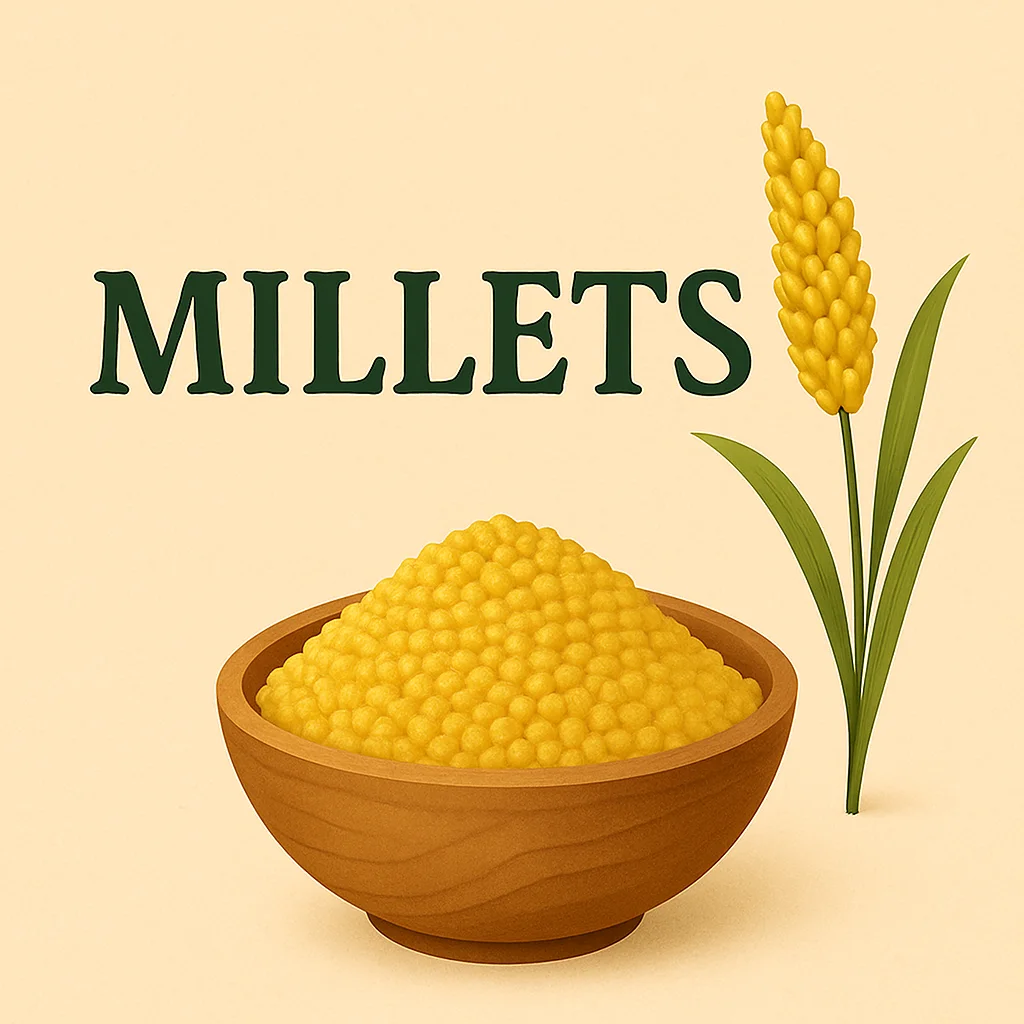
Millets are a group of small-seeded grasses grown as cereal crops. Unlike polished rice or refined flour, millets are whole grains loaded with fibre, vitamins, and minerals.
Nutritional Value of Millets (Per 100 g average)
- Calories: ~350 kcal
- Protein: 10–12 g
- Fibre: 8–12 g
- Carbohydrates: 65–70 g
- Rich in: Iron, Magnesium, Calcium, B Vitamins, Antioxidants
Health Benefits of Millets
1. Rich in Fibre
Millets support digestion, prevent constipation, and improve gut health.
2. Great for Diabetics
With a low glycaemic index, millets release sugar slowly, making them perfect for managing blood sugar.
3. Weight Management
Millets keep you full for longer, reducing unhealthy snacking.
4. Heart-Friendly
Magnesium and potassium in millets help reduce blood pressure and improve heart health.
5. Gluten-Free
Naturally gluten-free, millets are a safe grain option for people with gluten intolerance or celiac disease.
6. Sustainable Crop
Millets require less water and grow well in dry regions, making them eco-friendly.
Types of Millets You Should Know
- Foxtail Millet (Kangni) – High in iron, good for blood health.
- Finger Millet (Ragi) – Calcium-rich, strengthens bones.
- Pearl Millet (Bajra) – High energy, keeps the body warm.
- Little Millet (Kutki) – Light and easy to digest.
- Barnyard Millet (Sanwa) – Perfect for fasting, very low in calories.
- Kodo Millet – Good source of antioxidants.
Proso Millet (Chena) – Rich in protein and amino acids.
How Millets Are Used in India
- Roti & Parathas – Bajra roti, ragi paratha.
- Traditional Dishes – Millet khichdi, pongal, dosa.
- Snacks – Millet ladoos, chivda, baked chips.
Modern Fusion – Millet pizza base, millet pasta, millet cookies.
Millets Around the World
- Africa – Pearl millet is a staple in many countries.
- China & Korea – Proso millet and foxtail millet are common.
- Europe & USA – Millets are sold as gluten-free superfoods and in health snacks.
Recipes With Millets
1. Millet Upma
- Cook foxtail millet with onions, peas, carrots, and spices.
- A healthy replacement for rava upma.
2. Ragi Pancakes
- Mix ragi flour with jaggery, banana, and milk.
- Cook as pancakes and top with honey.
3. Bajra Khichdi
- Cook bajra with dal, ginger, and ghee.
- Comfort food with high nutrition.
4. Millet Biryani
- Use little millet instead of rice with biryani masala and vegetables.
Why You Should Add Millets to Your Diet
- 100% natural and gluten-free
- Packed with protein and fibre
- Sustainable for the environment
- Easy to cook, versatile in recipes
FAQs About Millets
Q1. Can millets replace rice and wheat?
Yes, millets can be used in place of rice or flour in most recipes.
Q2. Can children eat millets?
Yes, ragi and foxtail millet are great for kids due to their calcium and iron.
Q3. Do millets help in weight loss?
Yes, they are rich in fibre and keep you full longer.
Q4. How to store millets?
Store in airtight jars in a cool, dry place to maintain freshness.
Conclusion
Millets are not just an old grain – they are the grain of the future. Packed with health benefits, easy to cook, and good for the planet, they deserve a spot in every kitchen. Whether you prepare millet rotis, porridges, or even modern recipes like millet pasta, you’re making a healthy choice.
If you’re looking for tasty and nutritious options, don’t forget to explore our range of millet products (coming soon).